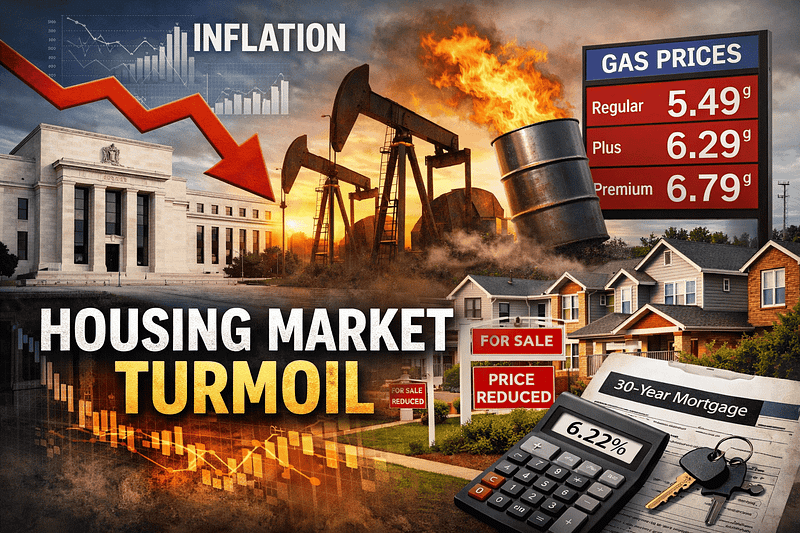

The spring housing market started with momentum but rising uncertainty is shifting the outlook. Sales and prices are up, Mortgage rates are climbing, Global tensions and inflation are impacting confidence. As we head into peak season, the market sits between opportunity and volatility.
Navigating Uncertainty in Today’s Real Estate Market
In recent months, the real estate market has experienced a mix of optimism and uncertainty, with various economic and geopolitical factors weighing heavily on the housing market. While February showed signs of recovery, with closed sales up 1.5% year-over-year and a 3.1% rise in the average sales price, the broader landscape reveals growing instability. Key trends such as inflation, rising mortgage rates, and the geopolitical turmoil in the Middle East are reshaping the real estate market. In this blog post, we’ll delve into these challenges and explore how they are affecting buyers, sellers, and investors in the real estate space.
Economic Pressures on the Real Estate Market
The Federal Reserve’s Dilemma: Inflation vs. Employment
The Federal Reserve’s recent meetings have underscored a tough balancing act: curbing inflation while dealing with a weakening labor market. February’s unemployment rate ticked up, and the economy lost 92,000 jobs. Meanwhile, inflation remains stubbornly high, well above the 2% target set by the Fed. These mixed signals are complicating the Fed’s decisions, and as a result, the Fed funds rate remains at 3.5% to 3.75%. For real estate, this means that mortgage rates, which are closely tied to the Fed’s actions, remain higher than many buyers and sellers would like.
Rising Oil Prices and Economic Uncertainty
The conflict in Iran has caused a spike in oil prices, surpassing $110 a barrel, and led to a significant rise in gas prices, up over 30%. These increases have created new economic challenges. While analysts predict a gradual return to normalcy, the uncertainty surrounding the duration of the conflict and its impact on global supply chains continues to influence the broader economy. In Georgia, for example, Governor Kemp temporarily suspended state taxes on gasoline, offering some relief. However, the lingering effects of rising energy costs are causing concern among consumers, further dampening consumer sentiment.
The Impact of Consumer Sentiment on the Real Estate Market
A Shift in Consumer Confidence
As the housing market approaches its traditional busy spring season, consumer sentiment has taken a sharp dip. According to the University of Michigan, March saw a 2% decline in consumer sentiment, marking the lowest reading of the year. This decline is largely attributed to fears surrounding rising gas prices and the broader economic instability caused by geopolitical events. In addition to economic factors, a recent Redfin survey revealed that nearly 60% of Americans fear that artificial intelligence (AI) could eliminate jobs and worsen housing affordability.
Mortgage Rates and Their Impact on Housing Affordability
H3: The Role of Mortgage Rates in Today’s Market
Mortgage rates are directly tied to the actions of the Federal Reserve and broader economic conditions. As the 10-year Treasury yield hit 4.39%—its highest level since July 2025—mortgage rates have climbed, with the 30-year fixed rate rising to 6.22% as of mid-March. This increase in borrowing costs has dampened the purchasing power of many potential buyers, especially first-time homebuyers who are feeling the pressure of affordability challenges.
Looking Ahead: What Does the Future Hold for Real Estate?
Long-Term Stability vs. Short-Term Instability
Despite the challenges, long-term trends continue to favor real estate. The supply of available homes remains relatively low, and the demand for housing continues, especially in desirable locations. However, in the short term, uncertainty prevails. The combination of high inflation, rising mortgage rates, and geopolitical instability has created a more complex market than in recent years. As the market approaches its peak selling season, buyers, sellers, and investors must remain cautious and adaptable.
Conclusion: What Buyers and Investors Need to Know
For those looking to buy or invest in real estate, the current landscape presents both opportunities and challenges. While the market is caught between long-term improvements and short-term instability, strategic planning and careful market analysis are key to making informed decisions. As always, it’s important to stay updated on economic developments, including inflation trends, interest rates, and geopolitical risks, to navigate the ever-changing real estate environment successfully.
Real estate professionals and investors need to remain flexible and prepared for a market that is less predictable than it has been in the past. With the right insights and strategy, opportunities will continue to emerge even amidst the uncertainty.