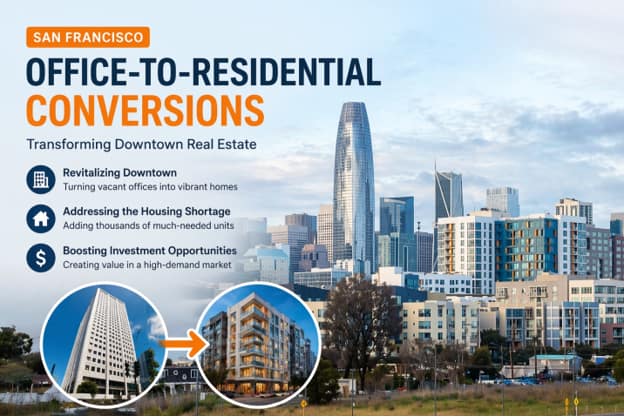

San Francisco is once again rewriting the rules of urban development. As the City by the Bay navigates a post‑pandemic economy, San Francisco office‑to‑residential conversions have emerged as a bold solution to two pressing challenges: high commercial vacancy rates and a persistent housing shortage. With tens of millions of square feet of empty offices, city leaders are offering long‑term financial incentives to convert underutilized buildings into vibrant housing. This trend—coupled with rising median home prices and continued demand—creates both opportunities and questions for investors, developers, and tenants.
Why is Downtown San Francisco Ripe for Conversions?
Downtown San Francisco has been hit hard by remote work and shifting corporate footprints. Recent estimates suggest the city has about 30 million square feet of vacant office space, and prior incentives to spur redevelopment have failed to produce any conversion projects. In response, Mayor Dan Lurie signed a special financing district into law on February 12 2026. The program offers 30 years of incentive payments backed by future property‑tax growth, trimming 10–20 percent of development costs for eligible projects. City officials estimate that up to 48 older office buildings—mostly historic Class B and C structures with operable windows—could be converted under the program, creating roughly 4,400 new housing units.
This new legislation is part of a larger strategy to transform downtown into a 24/7 neighborhood where people can live, work, play and learn. By shifting unused commercial floors into apartments and condos, the city hopes to reinvigorate street‑level retail, improve safety, and increase foot traffic for existing businesses. It also helps address San Francisco’s chronic housing shortage while making better use of existing infrastructure.
Market Context: Bay Area Housing Trends
The push for conversions comes against the backdrop of a resurgent Bay Area housing market. According to an analysis of California Association of Realtors data, statewide median home prices reached a record high of over $900,000 in 2024 as buyers and sellers adjusted to higher interest rates. Within the Bay Area, sales activity surged by 23.1 percent year over year, while median prices jumped 15.5 percent. San Francisco County itself saw prices edge up to around $1.8 million, reflecting continued demand for urban living even as suburban counties recorded stronger growth.
These numbers underscore the region’s fundamentals: a diversified economy anchored by technology and life sciences, limited developable land, and strong job growth. Even though some counties experienced price dips, the Bay Area remains a magnet for investors seeking appreciation potential. Converting obsolete offices into housing helps balance the supply side, easing pressure on residential prices while offering developers new revenue streams.
How Conversions Affects Investors, Owners and Tenants
Opportunities for Investors
- Adaptive reuse and value‑add potential. Vacant Class B and C office buildings in the Financial District, Union Square and SoMa are prime candidates for conversion. Investors can acquire these assets at discounted prices and benefit from city incentives that reduce renovation costs. With demand for downtown living expected to rebound, converted projects may command premium rents or sell quickly to owner‑occupiers.
- Portfolio diversification. Office‑to‑residential conversions enable investors to hedge against continued office‑market weakness. By shifting exposure to residential income, portfolios become more resilient to work‑from‑home headwinds and cyclical office demand.
- Environmental and social impact. Adaptive reuse reduces demolition waste and preserves architectural heritage. It also supports the city’s goal of creating a mixed‑use, walkable downtown, which enhances livability and sustainability.
Considerations for Property Owners
- Feasibility analysis. Not every building is suitable for conversion. Floor plate depth, window spacing and structural design must allow for natural light and ventilation. Owners should commission feasibility studies to determine whether their assets meet city guidelines.
- Financing and timing. The new financing district provides a significant incentive, but conversions remain capital‑intensive. Owners must secure bridge financing and navigate building codes. Engaging experienced architects and contractors is crucial.
- Tenant relationships. For partially occupied buildings, owners may need to negotiate relocation or termination with commercial tenants. Transparent communication and fair compensation help avoid legal challenges.
Implications for tenants
- Increased housing supply. Conversions could deliver thousands of new units in desirable neighborhoods, potentially easing rent pressures and providing more options for renters and buyers.
- Mixed‑use amenities. Many adaptive‑reuse projects integrate ground‑floor retail, co‑working space, rooftop gardens and community rooms. Tenants benefit from on‑site amenities that enhance urban living.
- Transition period. Construction can disrupt surrounding areas. Tenants should expect temporary noise and traffic changes during conversion projects and plan accordingly.
Beyond Housing: Broader Real Estate Considerations
San Francisco’s conversion program also affects other asset classes:
- Office and retail. Reducing the surplus of vacant offices could stabilize the office market by shrinking supply. Retail tenants may benefit from increased residential foot traffic as new residents move in. Owners of neighboring buildings should anticipate rising rents and improved occupancy.
- Industrial and mixed‑use. As industrial demand grows—spurred by e‑commerce and life sciences—developers may consider mixed‑use projects that combine light industrial uses with apartments or offices. Proximity to ports and freeways remains key.
- Property management. Managing a converted building requires expertise in both commercial and residential operations. Property managers must handle residential leases, HOA governance, amenity maintenance and compliance with new codes. Partnering with an experienced property management firm ensures smooth operations.
Navigating the Opportunity
San Francisco’s ambitious push for office‑to‑residential conversions signals a pivotal shift in urban planning. By unlocking new housing supply in the heart of downtown, the city aims to reenergize neighborhoods and support long‑term economic growth. For investors, developers and residents, this is a moment to evaluate portfolios, explore adaptive‑reuse opportunities and participate in shaping the next chapter of San Francisco real estate. As market conditions evolve and incentives roll out, partnering with a knowledgeable local agent can make the difference between a successful investment and a missed opportunity. Whether you’re considering purchasing a vacant office building, investing in a conversion project or simply curious about market trends, now is the time to watch this space. Stay informed, do your due diligence, and leverage professional guidance to navigate the dynamic Bay Area market.