
2026 Bay Area Real Estate Outlook: Lower Mortgage Rates, AI Boom & Local Momentum
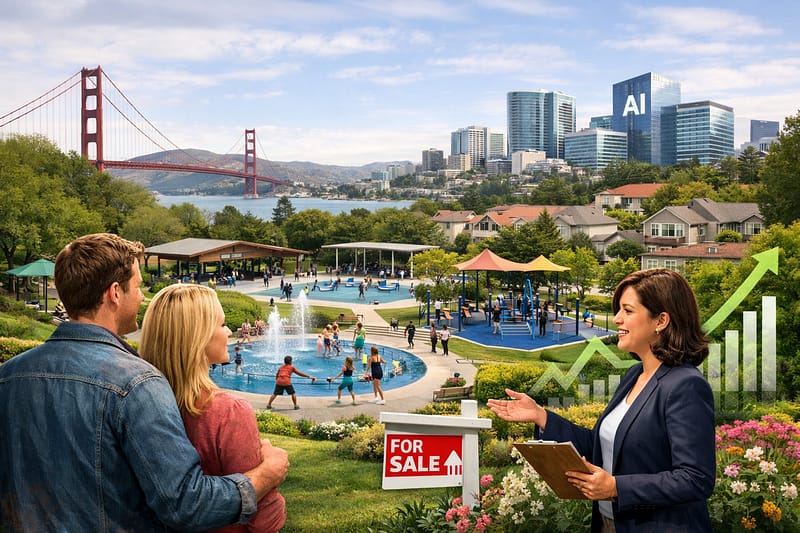
The year 2026 is shaping up to be one of renewal and opportunity for Bay Area housing. Forecasts point to lower mortgage rates, modest price growth and a rebound in sales activity. At the same time, economic tailwinds from a booming artificial‑intelligence sector are injecting fresh wealth into San Francisco, while civic projects like the Hoover Park renovation in Redwood City are improving quality of life and supporting property values. For buyers and sellers in Redwood City, San Carlos and South San Francisco, understanding how these forces converge is essential to making informed decisions.
Lower mortgage rates & market forces
Mortgage interest rates peaked near 7–8% in recent years but are expected to settle around the 6% range in 2026 as the Federal Reserve eases its stance. Even a modest decline can significantly improve affordability by reducing monthly payments, opening the door for more households to qualify for home loans. Lower rates also tend to increase sales activity and bring buyers and sellers into better alignment. For Bay Area markets like San Francisco and Marin County, analysts expect this trend to translate into renewed momentum.
Price growth & inventory: steady but competitive
Researchers project that Bay Area home prices will rise by roughly 2–6% in 2026. This nominal growth reflects both tight supply and resilient demand. However, not all segments will perform equally. Single‑family homes in desirable neighborhoods with good schools, commuter access and amenities are likely to outpace condos and entry‑level properties. Sales volume could rebound by up to 14% if mortgage rates ease towards the mid‑6% range.
Inventory, meanwhile, is expected to improve but remain constrained. Many parts of San Francisco and neighboring counties have seen chronically low listings relative to demand, and analysts do not expect enough new supply to fully correct the imbalance. As a result, well‑priced homes in desirable areas will continue to attract multiple offers and short days on market.
The AI boom & luxury market resurgence
San Francisco’s luxury housing market has surged on the back of an expanding artificial‑intelligence sector and a pronounced shortage of high‑end inventory. Well‑capitalized buyers are re‑entering the market with confidence, and premier properties—particularly single‑family homes—are trading quickly, often at or above asking prices. Active listings have declined year‑over‑year while buyer activity has intensified, underscoring renewed confidence in the city’s long‑term fundamentals.
The AI effect is more than a headline. Major companies such as OpenAI, Databricks and Anthropic are headquartered in San Francisco and have seen rapid growth and rising valuations. Anticipation of future public offerings is energizing the luxury segment, and many early employees are converting paper wealth into tangible assets like real estate. This mirrors previous tech cycles but with one key difference: supply constraints are even tighter. Geographic limitations and lengthy development timelines restrict new construction, so increased demand puts upward pressure on prices.
Neighborhood dynamics: why micro‑markets matter
San Francisco is not a uniform market; outcomes depend heavily on neighborhood. Pricing patterns, buyer demand and lifestyle appeal vary block by block. For example, the Richmond District consists of three micro‑neighborhoods—Outer Richmond, Central Richmond and Inner Richmond—that each balance residential character with access to green space. Understanding these micro‑markets helps buyers refine their search and sellers position their properties competitively.
Spotlight on Redwood City, San Carlos & South San Francisco
Redwood City: On March 16, 2026, city officials broke ground on the largest park upgrade in over 30 years: a $11 million renovation of Hoover Park. Funded through $4.6 million in federal Community Development Block Grant dollars and $6.4 million from the city, the project will revitalize 3.5 acres with a splash pad, fitness court, pickleball and volleyball courts, multiple playgrounds and dog play areas. Construction began in January 2026 and is expected to finish in January 2027. Beyond recreation, proceeds from selling 1306 Main Street created 22 affordable replacement units and funding for 94 additional affordable homes. This holistic investment signals a commitment to livability and affordability, which can enhance property values and attract residents.
San Carlos: With its charming downtown and easy access to both Silicon Valley and San Francisco, San Carlos continues to attract buyers seeking a small‑town feel without sacrificing commute times. Like Redwood City, San Mateo County faces ongoing housing shortages; however, civic projects and zoning reforms are gradually unlocking new inventory. Buyers should watch for mixed‑use developments that blend residential, retail and green space, and sellers should highlight proximity to quality schools and parks.
South San Francisco: Known as “The Industrial City,” South San Francisco has evolved into a biotech hub. Recent transit improvements and the growth of the life‑sciences sector have increased demand for both single‑family homes and condos. Affordability relative to central San Francisco makes South San Francisco a compelling option for first‑time buyers, while its employment base provides stability. Investors should monitor how new commercial developments and infrastructure improvements impact neighborhood desirability.
Tips for buyers
- Monitor mortgage rates: Use falling rates to gauge affordability and understand what monthly payment fits your budget. Getting pre‑approved early will strengthen your offer when competition is fierce.
- Focus on neighborhoods: Narrow your search to areas that match your lifestyle and long‑term goals. Micro‑markets like the Richmond District or Peninsula suburbs each offer different price points and amenities.
- Act decisively: In a tight‑inventory market, quality homes in desirable neighborhoods move quickly. Having a clear budget and must‑have list helps you write competitive offers when the right property appears.
- Partner with a local expert: Real‑estate decisions are deeply local. A seasoned agent like Debbie LaMica can provide neighborhood‑level insight, identify off‑market opportunities and guide you through financing, inspections and negotiations.
Tips for sellers
- Stage and price strategically: Professionally staged homes priced in line with market realities attract strong interest. In a supply‑constrained environment, even modest price improvements can yield significant value.
- Highlight community investments: Civic improvements, parks and infrastructure upgrades—such as the Hoover Park renovation—are selling points that demonstrate long‑term neighborhood appeal.
- Leverage multimedia marketing: High‑quality photography, videography, virtual tours and targeted digital campaigns ensure your property reaches a broad audience—critical when buyers are both local and remote. Debbie’s comprehensive marketing plan already integrates these elements.
- Work with experienced representation: Sellers who partner with a knowledgeable agent benefit from data‑driven pricing, access to buyer networks and skilled negotiation, all of which can maximize outcomes.
Conclusion: prepare for opportunity
The 2026 outlook for Bay Area real estate suggests steady growth—not a boom but a market defined by balanced momentum. Lower mortgage rates, modest price appreciation, AI‑driven wealth creation and civic investments like the Hoover Park renovation all point to a resilient yet competitive landscape. Whether you’re buying your first home, upgrading to a luxury property or considering an investment, the key to success is local insight. Reach out to Debbie LaMica for personalized guidance on navigating Redwood City, San Carlos, South San Francisco and beyond.